The Newcastle Homeowner's Guide to Termites
Everything you need to know about termites in the Hunter region: the species that cause damage, the warning signs to watch for, what attracts them, how to prevent them, and what the Australian Standard AS3660 actually means.
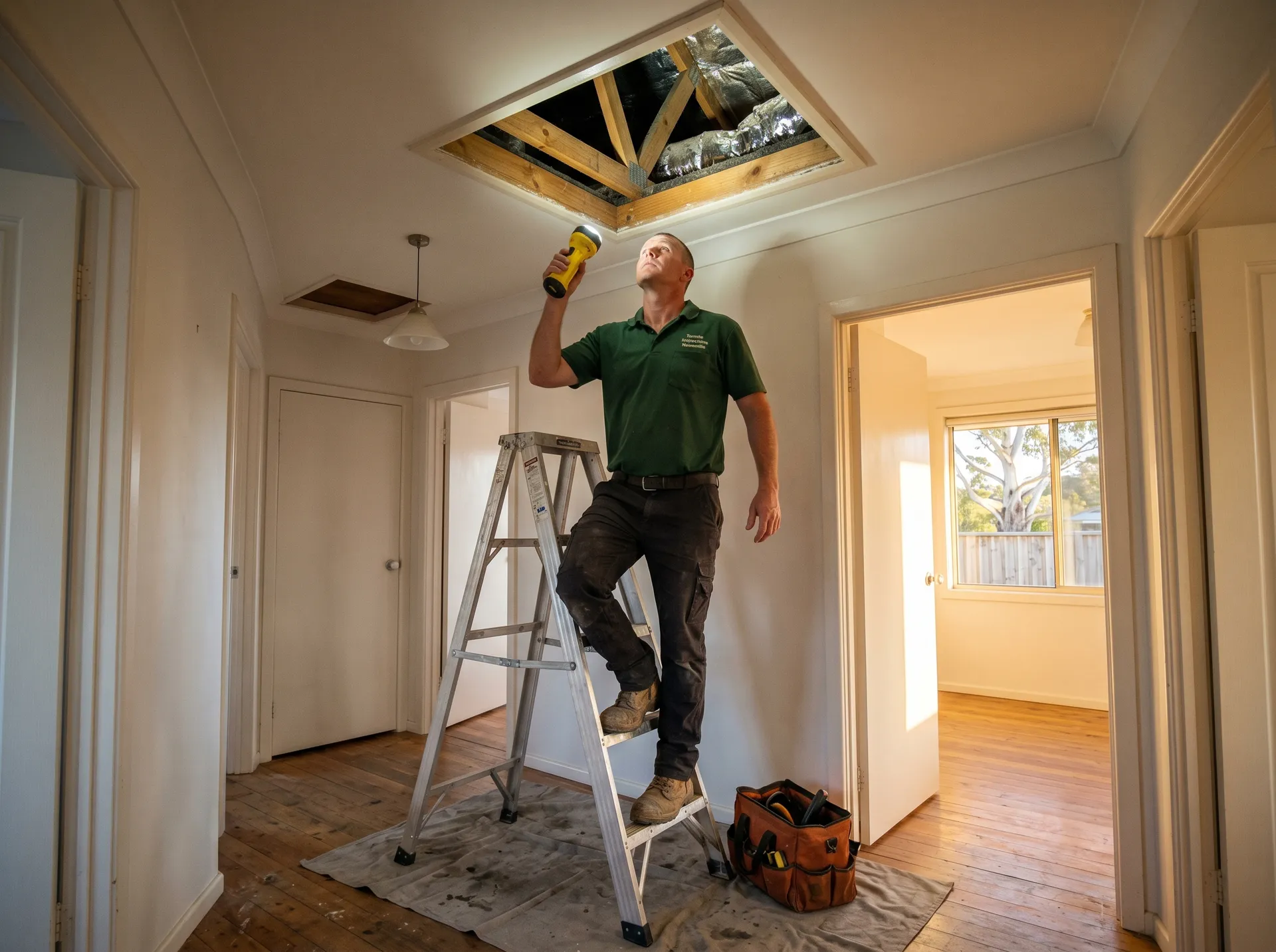
Hunter region risk
Newcastle and the Hunter sit in a moderate-to-high termite risk zone. Coastal humidity, warm summers and plenty of untreated garden timber all play a part.
Common Species in NSW
While hundreds of species exist, these are the primary threats to Newcastle residential and commercial structures.
Coptotermes acinaciformis
The most destructive termite species in Australia. Subterranean, with large colonies that can travel tens of metres from the nest. Responsible for the majority of serious structural damage we see in Newcastle homes.
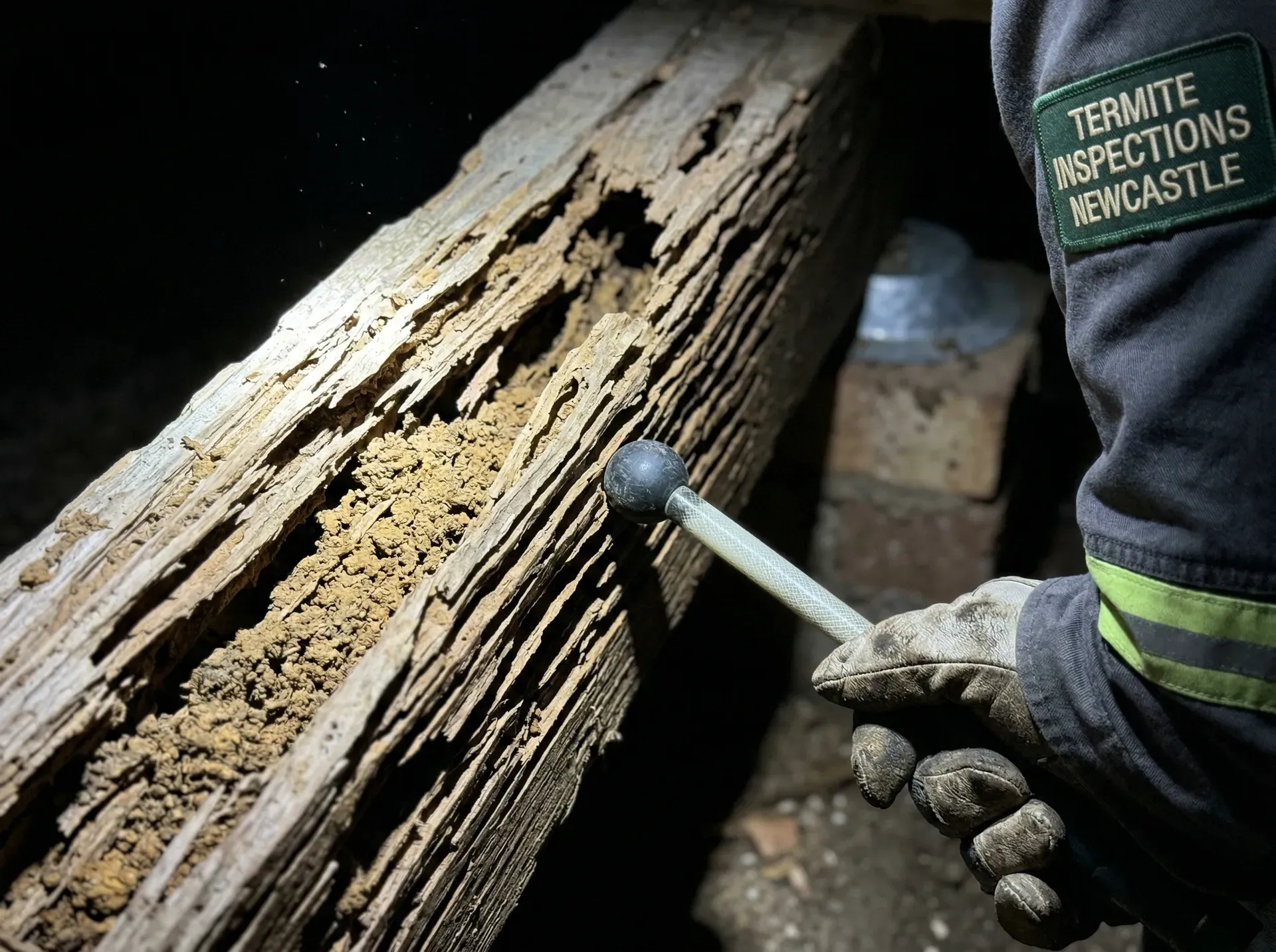
Schedorhinotermes intermedius
A secondary pest that attacks damp or decaying timber. Common in Newcastle subfloors where moisture has built up. Often found alongside existing water damage.
Nasutitermes walkeri
Builds visible arboreal nests in trees around the Hunter. Less destructive than Coptotermes, but can still damage fences, decks and landscape timbers if left alone.
Identifiable by soldiers with dark, pointed (nasute) heads that spray a defensive secretion.
Warning Signs to Watch For
Termites work silently inside timber, but they leave evidence behind. Spotting any of these signs is a reason to call us for an inspection straight away.
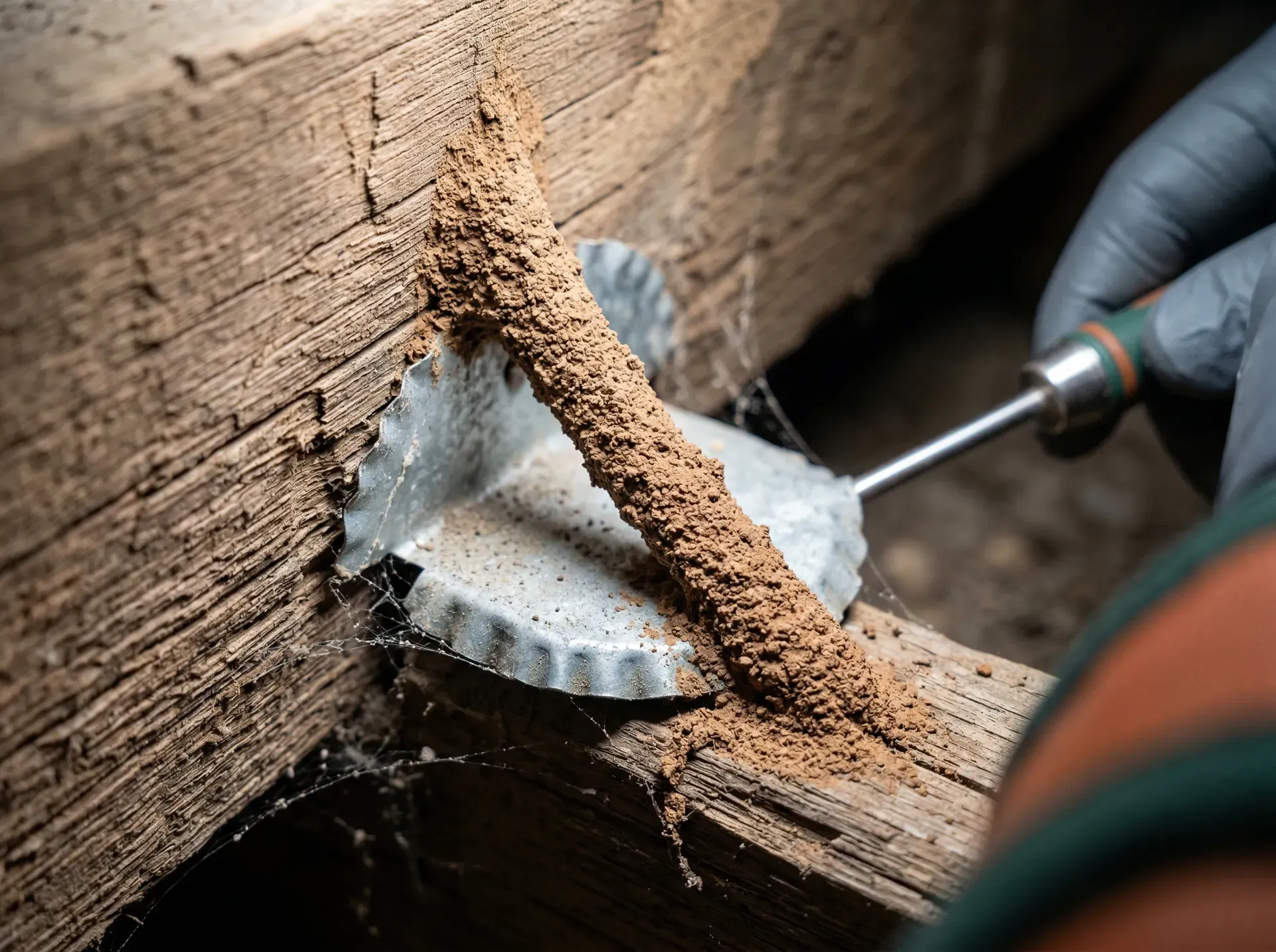
Mud Tubes
Pencil-thick brown tunnels running up foundations, piers or walls. Termites build them to stay damp and out of the light as they travel between the soil and their food source.
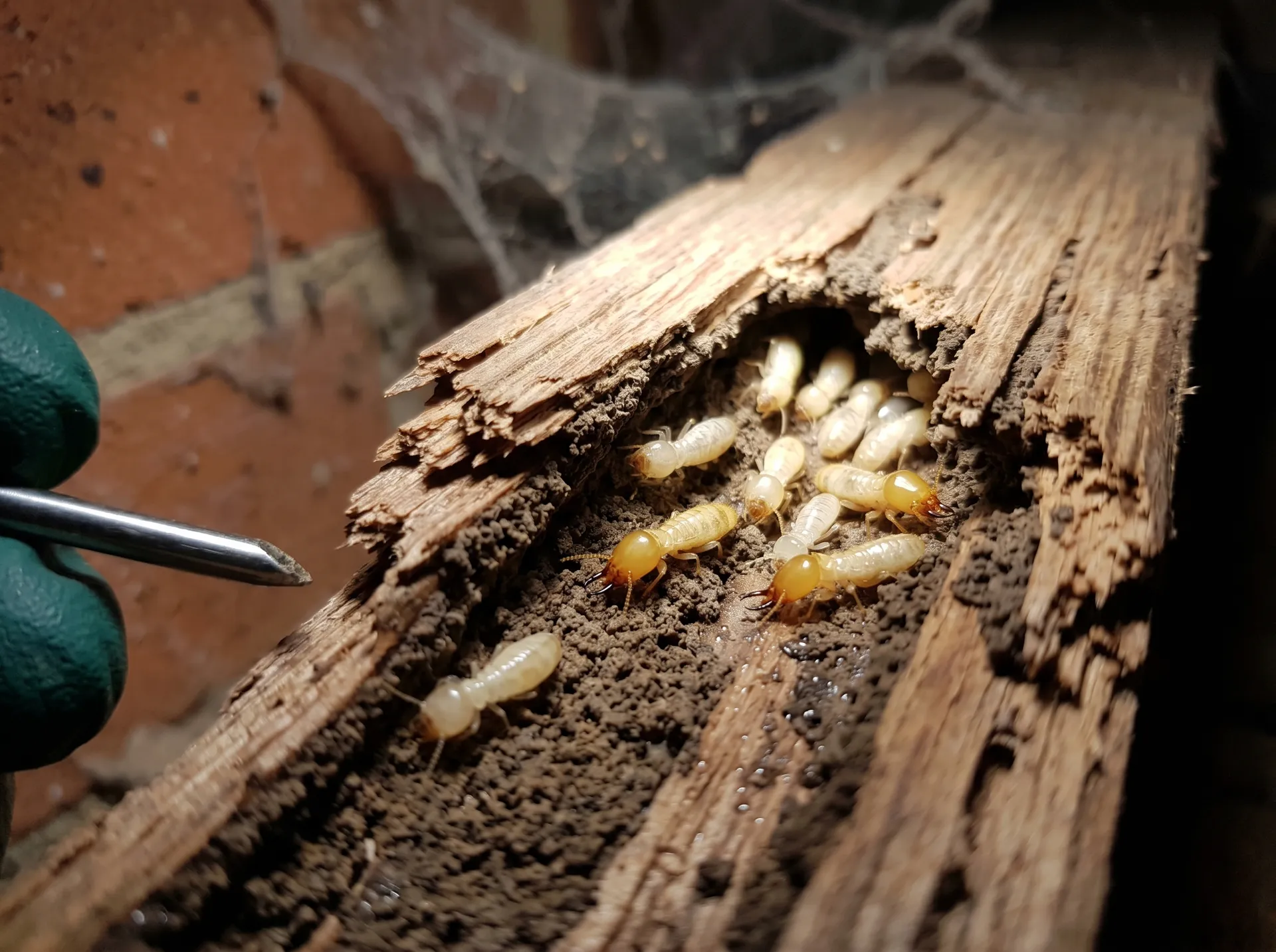
Hollow-Sounding Timber
Tap a skirting board, architrave or door frame with a screwdriver handle. If it sounds hollow or the surface feels papery, termites may have eaten out the inside while leaving a thin shell.
Sticking Doors & Windows
Moisture from termite activity swells timber frames. Doors or windows that suddenly stick, or skirting boards that bow out, can be an early clue of hidden activity.
Discarded Wings & Frass
After a swarming flight, you'll find small translucent wings near windows or light fittings. Frass (fine sawdust-like droppings) below skirtings or window sills is another telltale sign.
Moisture & Leaks
Soil-Wood Contact
Poor Drainage
Debris Near Slab
What Attracts Termites
Termites need moisture, warmth and a food source. Most infestations we see in Newcastle homes come back to one of these conditions being present around the house.
-
Moisture and leaks
Leaking taps, dripping air conditioners, blocked gutters and poor drainage all create the damp conditions termites need.
-
Timber in contact with soil
Untreated retaining walls, garden sleepers and pergola posts give termites a direct path from the ground to your home.
-
Mulch piled against the house
Keep mulch and garden beds at least 75mm below the weep holes and away from the slab edge.
-
Stored firewood and offcuts
Stacks of timber against the house act as both a food source and a hidden bridge past any termite barrier.
Understanding AS3660
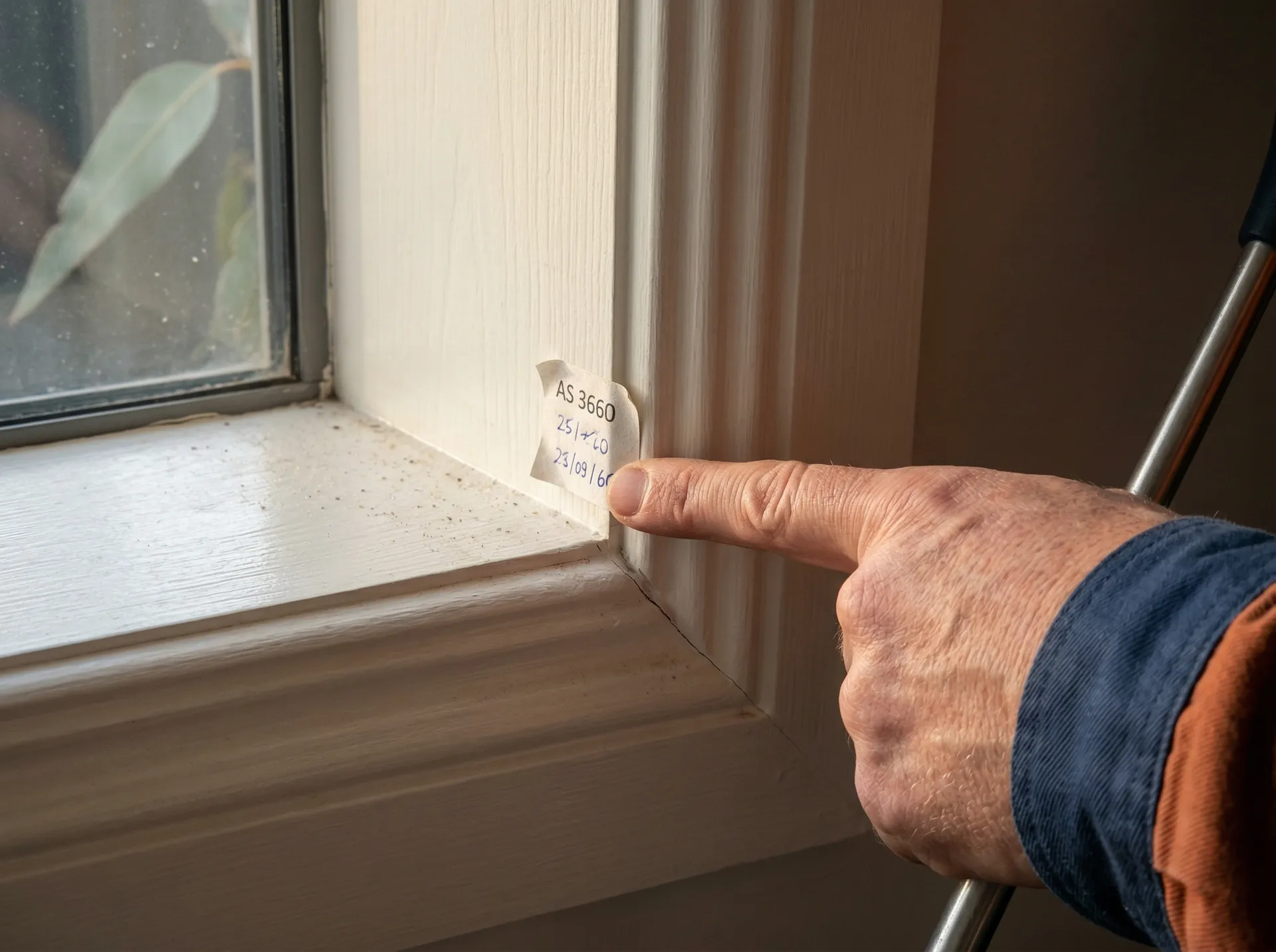
AS3660 is the Australian Standard for termite management. AS3660.1 covers the prevention of subterranean termites in new buildings, including physical and chemical barriers installed during construction. AS3660.2 covers the inspection and management of existing buildings. When we quote an inspection or a barrier, it is to these standards.
shield Prevention Focus
AS3660 focuses on creating barriers (physical or chemical) that force termites into the open where they can be seen during regular inspections. Prevention plus inspection, not one or the other.
assignment_turned_in What Lenders Expect
Most mortgage lenders require an AS3660.2 compliant timber pest report before settling on an established home. Builders need AS3660.1 compliance for new construction.
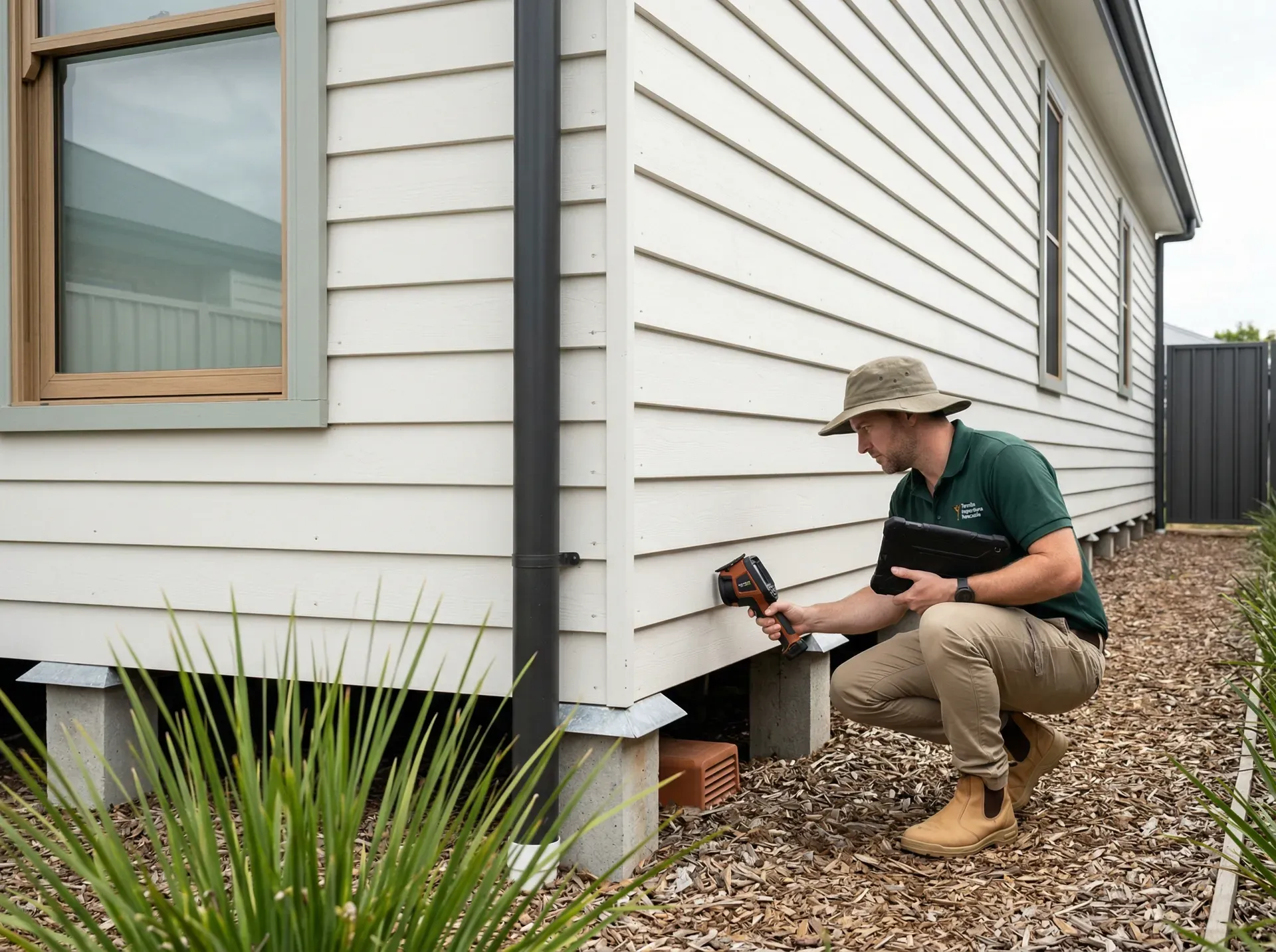
Every inspection includes a written AS3660.2 report with photographs.